Car doors: a fusion of art and technology beyond opening and closing
In the eyes of most people, a car door is just a simple component used for entering and exiting the cabin and ventilation. However, it is far from that simple. It is a key part of the vehicle structure, the first barrier to safety, a reflection of design aesthetics, and a stage for the increasing innovation of automotive technology. A car door that combines the essence of mechanical engineering, materials science, electronic technology, and industrial design.
1、 Basic function: the core of safety, convenience, and comfort
The most basic function of a car door is to provide convenient passenger access. But on this basis, it has been endowed with more core missions:
Passive safety cornerstone: The car door is an important component of the vehicle’s side structure. It usually has built-in anti-collision beams (made of high-strength steel or aluminum alloy) inside, which can effectively resist intrusion in side collisions and reserve crucial living space for passengers. The sturdy door hinge and locking mechanism ensure that the door will not easily pop open in the event of a collision, ensuring that passengers will not be thrown out of the car.
Sealing and quietness: The car door is isolated from wind, rain, dust, and noise through a complex sealing strip system, forming a peaceful and comfortable private space together with the body of the car. The dull “bang” sound when closing the door is often the first impression that measures the craftsmanship and sense of grade of the vehicle.
Function integration platform: Modern car doors are highly integrated modules. It accommodates window lift systems, door lock mechanisms, speakers, even ambient lighting and storage space.
2、 Different forms: Different types of door designs
In order to meet the positioning and design requirements of different vehicle models, engineers have created various forms of car doors:
Traditional open type: the most common type, opens forward, conforms to ergonomics, and has high safety.
Gull Wing Gate: Derived from the classic Mercedes Benz 300SL, it unfolds upwards like seagull wings, creating a strong visual impact. It is commonly seen in supercars (such as Tesla Model X), but requires high opening space.
Scissor doors: Developed by Lamborghini, the doors open vertically forward and upward through hinges, like open scissors, which are equally cool and save space on both sides, but the convenience of getting in and out is average.
Double door: The front and rear doors open in reverse, without the need for a B-pillar design (such as Rolls Royce and Mazda RX-8), making it convenient for rear passengers to enter and exit, creating a sense of luxury and ceremony, but requiring extremely high structural strength of the vehicle.
Sliding door: Standard on MPVs, it slides horizontally backwards to open, greatly facilitating getting in and out of narrow spaces and loading items.
Rotating door/butterfly door: Combining the characteristics of scissor doors and gull wing doors, it folds outward while opening upwards (such as McLaren F1), balancing the opening angle and space convenience.
3、 Technology Empowerment: The Evolution of Intelligence and Humanization
Modern car doors are no longer purely mechanical components, and more and more electronic intelligent technologies are being integrated into them
Keyless entry: Users only need to bring their smart key close to the vehicle and touch the door handle to unlock, greatly improving convenience.
Electric suction door: When the door is gently closed to near closure, the motor automatically sucks it in and locks it, avoiding the embarrassment of forcefully closing the door and enhancing the sense of luxury and quietness (commonly seen in luxury models).
Safe exit assistance: At the moment of opening the door, if the system detects a vehicle or pedestrian approaching quickly from behind, it will issue an alarm or even temporarily lock the car door to prevent “door opening kill” accidents. This is a crucial active safety function.
Electric sliding door: It can automatically open and close through buttons, foot kick sensing, or remote control. The hands free function is particularly useful when holding items.
4、 Hidden Door Handle: The Pursuit of Wind Resistance and Aesthetics
In order to pursue ultimate aerodynamics and a simple futuristic feel, hidden door handles have become a design trend for modern electric vehicles and high-end models.
Reducing wind resistance: A flat surface of the door panel can reduce turbulence, making a subtle but crucial contribution to improving battery life and reducing wind noise.
Enhance aesthetic appeal: When the car door is closed, it forms a complete and smooth curved surface, with a more overall and concise shape, full of technological sense.
Working principle: Usually triggered by electronic buttons or induction, the door handle will automatically pop out; After the vehicle is locked or driven, it will automatically retract and integrate with the body of the vehicle.
Random Posts
-

Car doors: a fusion of art and technology beyond opening and closing Sep 4, 2025
-

Oil filter – the “kidney” of the engine Sep 4, 2025
-

The evolutionary history from functional ‘lungs’ to brand’ face ‘ Sep 4, 2025
-

Air filter – the “mask” of the engine Sep 4, 2025
-

Chinese Automakers Take Center Stage at Tehran Exhibition Amid Market Shift Nov 12, 2025
Random Products
-
 Air filter for FA-RNAP
-
 Cylinder head for Chery 315 477F-1003010
-
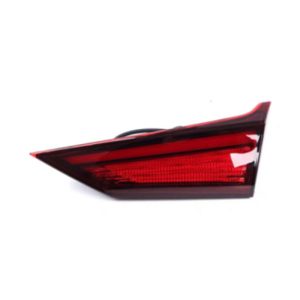 Combined rear lamp assembly II (left) for EADO PLUS C211F280503-0501-AA
-
 Combined headlamp assembly I (right) for EADO PLUS C211F280501-0207
-
 Combined rear lamp assembly I (left) for UNI-V C281F280503-0400
-
 Reflex reflector assembly (right) for EADO PLUS C211F280503-2000
-
 Combined rear lamp assembly II (right) for CS95 S401041-1011-AA
-
 Hydraulic clutch bearing for X22 MT sport lux 119000027AA
-
 CVT output shaft bearing for NEW MVM X33 CVT, MVM550 CVT, MVM TIGGO5-CVT Luxury, MVM TIGGO5-EXCELLENT-SPORT, MVM TIGGO5-CVT-LUXURY-SPORT 019CHA-1502504

